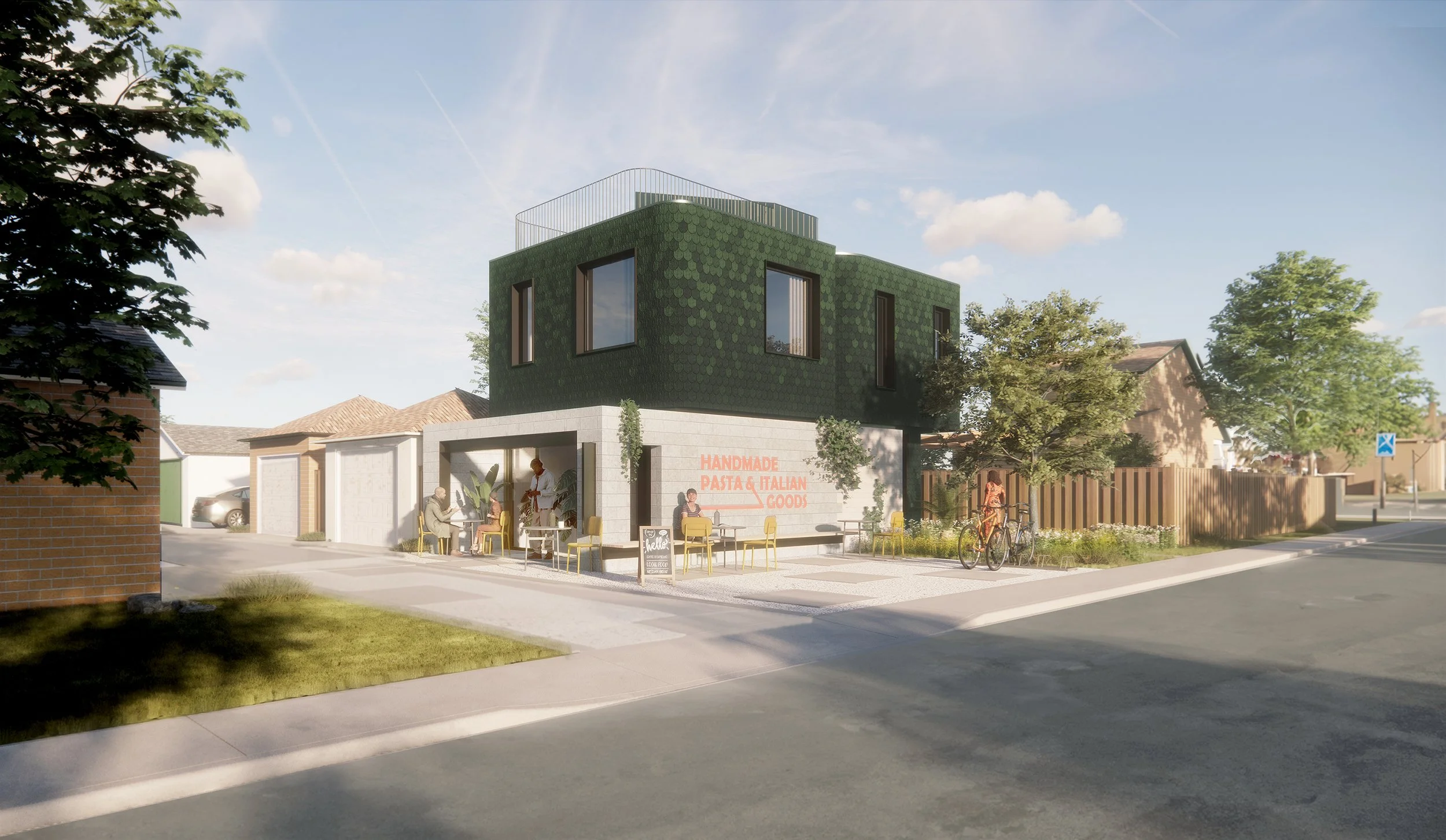
Commercial Laneways
Many of Toronto’s small businesses begin at home, but as they grow, the city is lacking more accessible spaces for small-scale commercial and retail businesses.
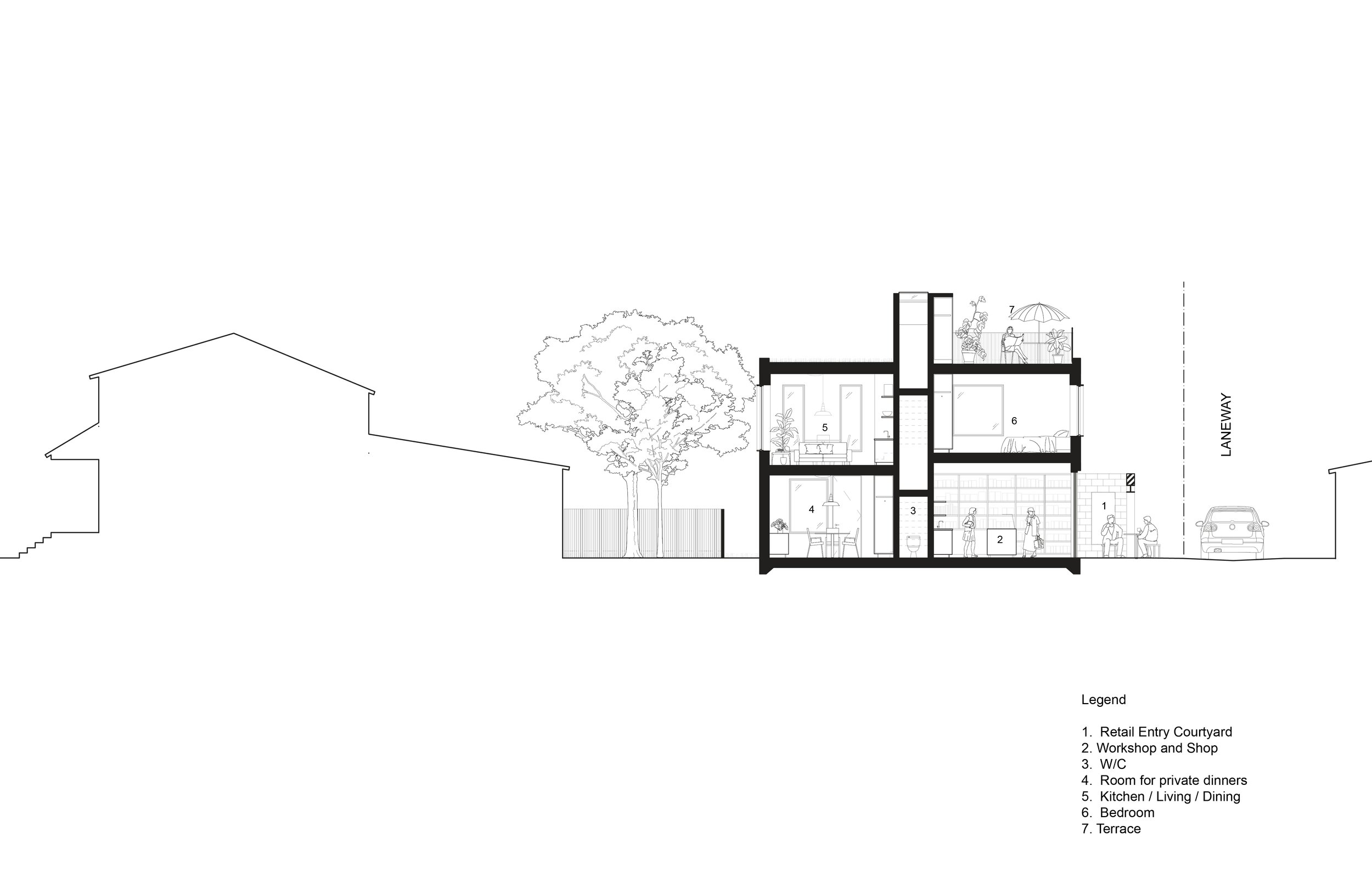
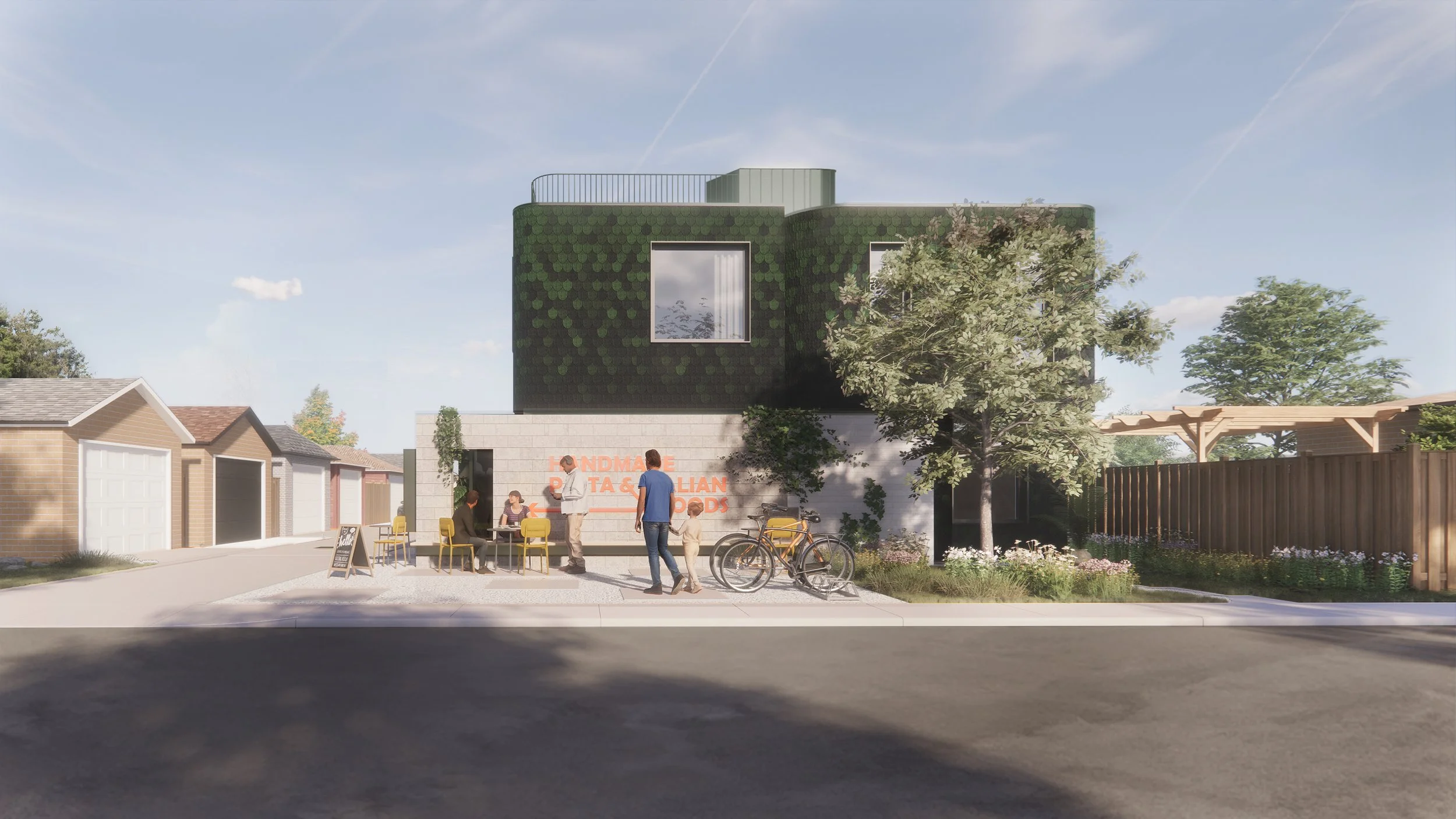
Developed for a typical corner lot with frontage on both a local street and laneway, this proposal explores how an existing garage might be transformed to support a growing family business. Designed for a grandmother and granddaughter who operate a handmade pasta shop, the project combines production space, retail, workshop space, and housing within a compact footprint.
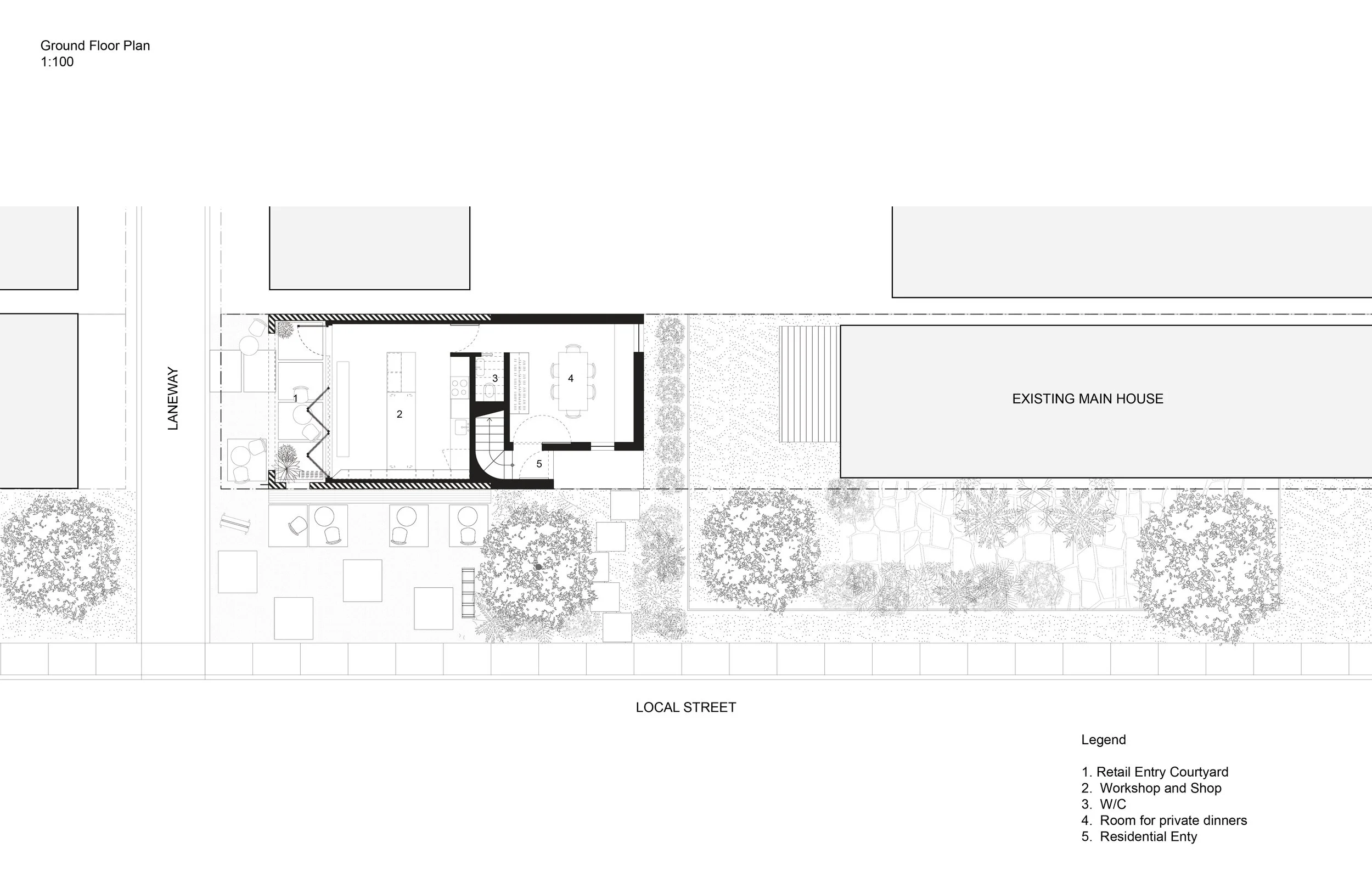
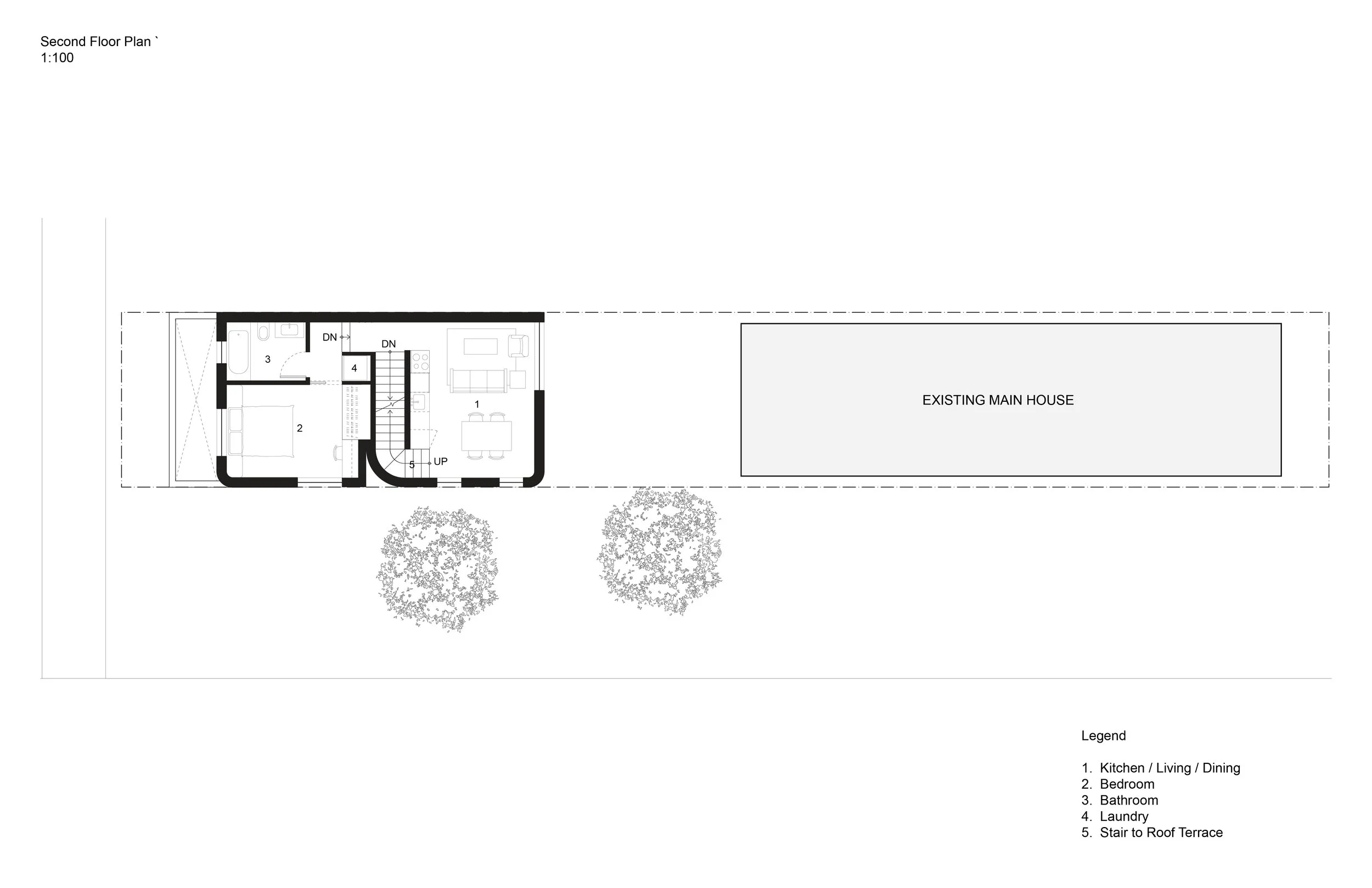
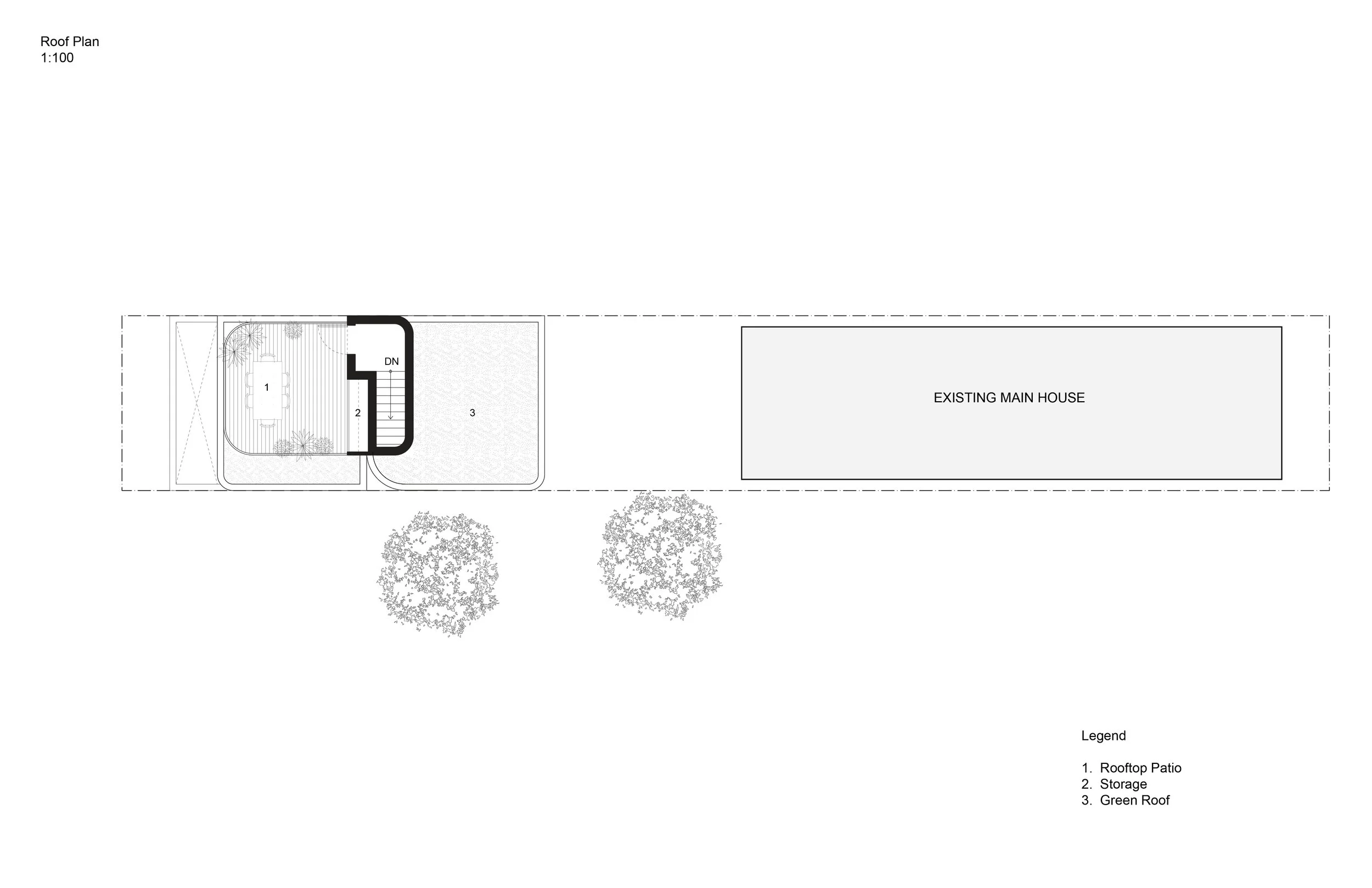
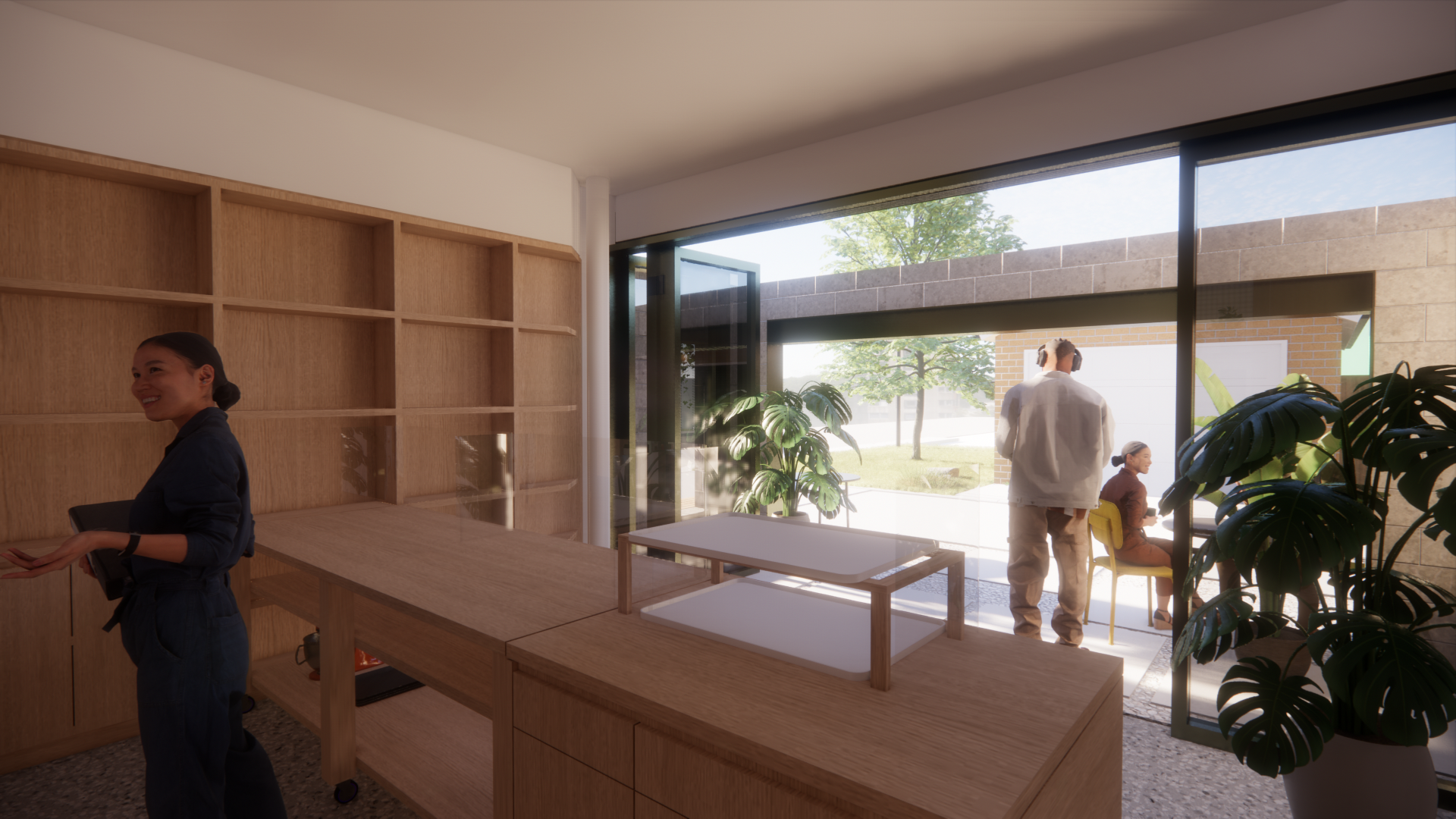
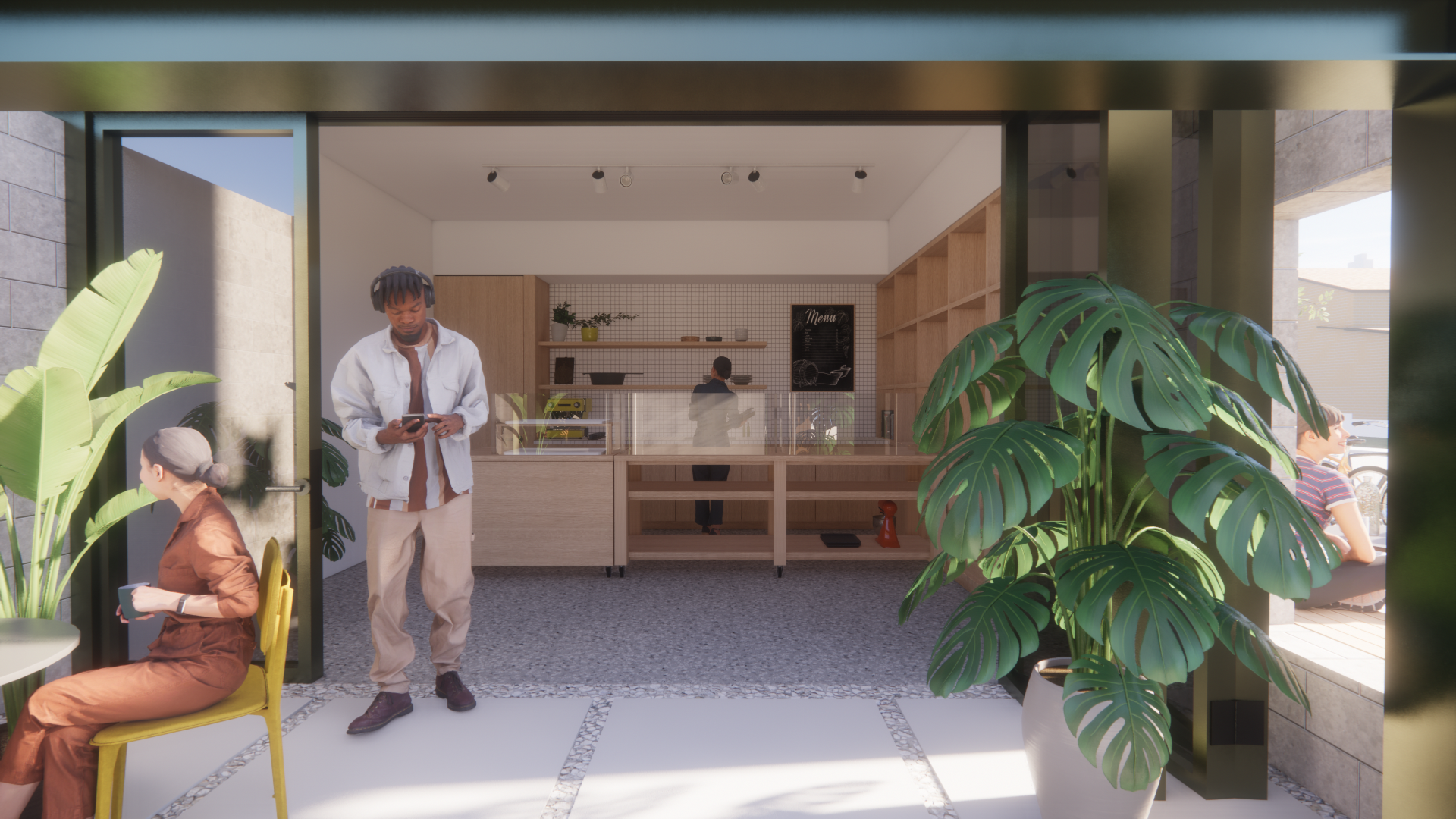
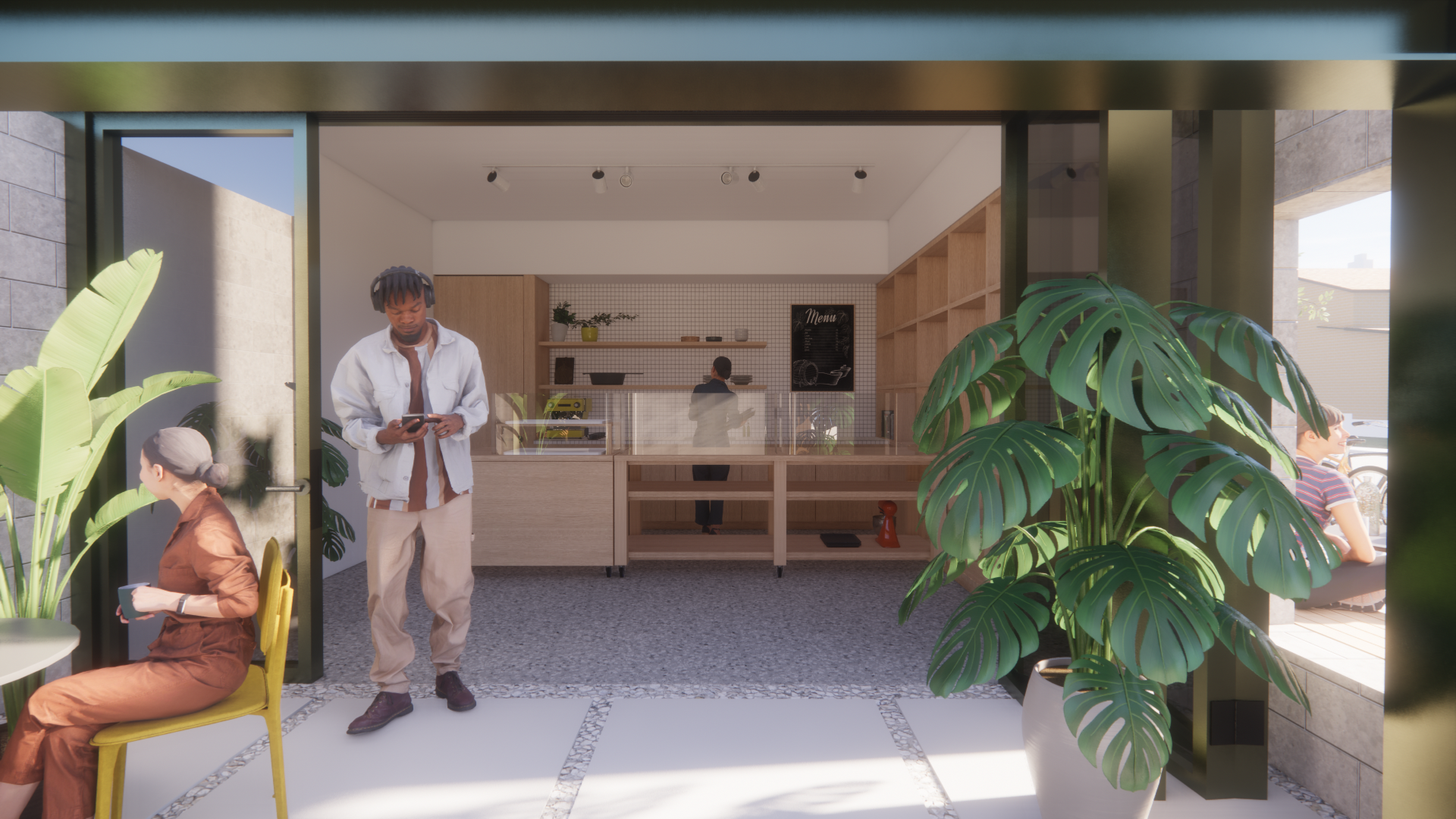
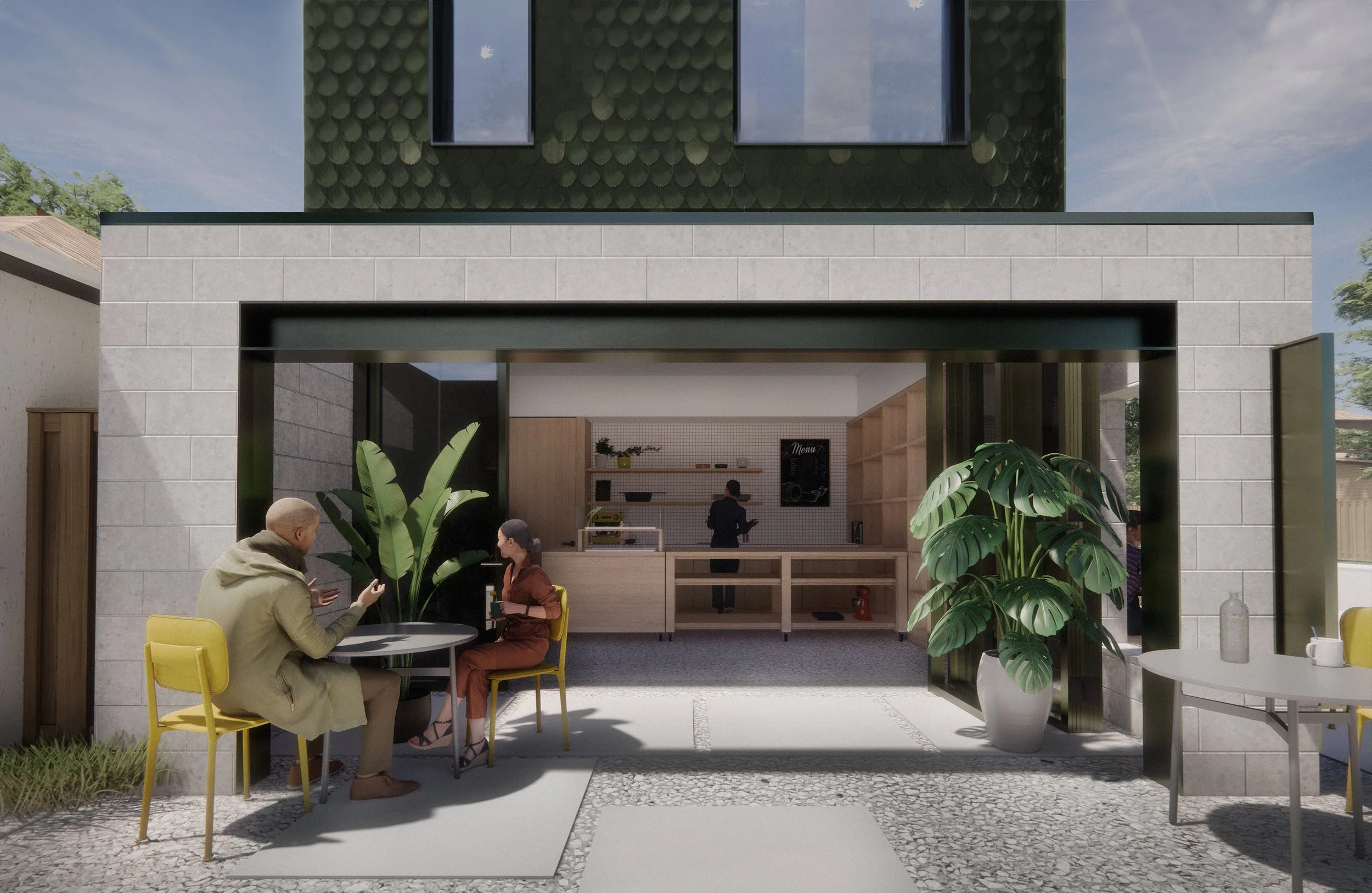
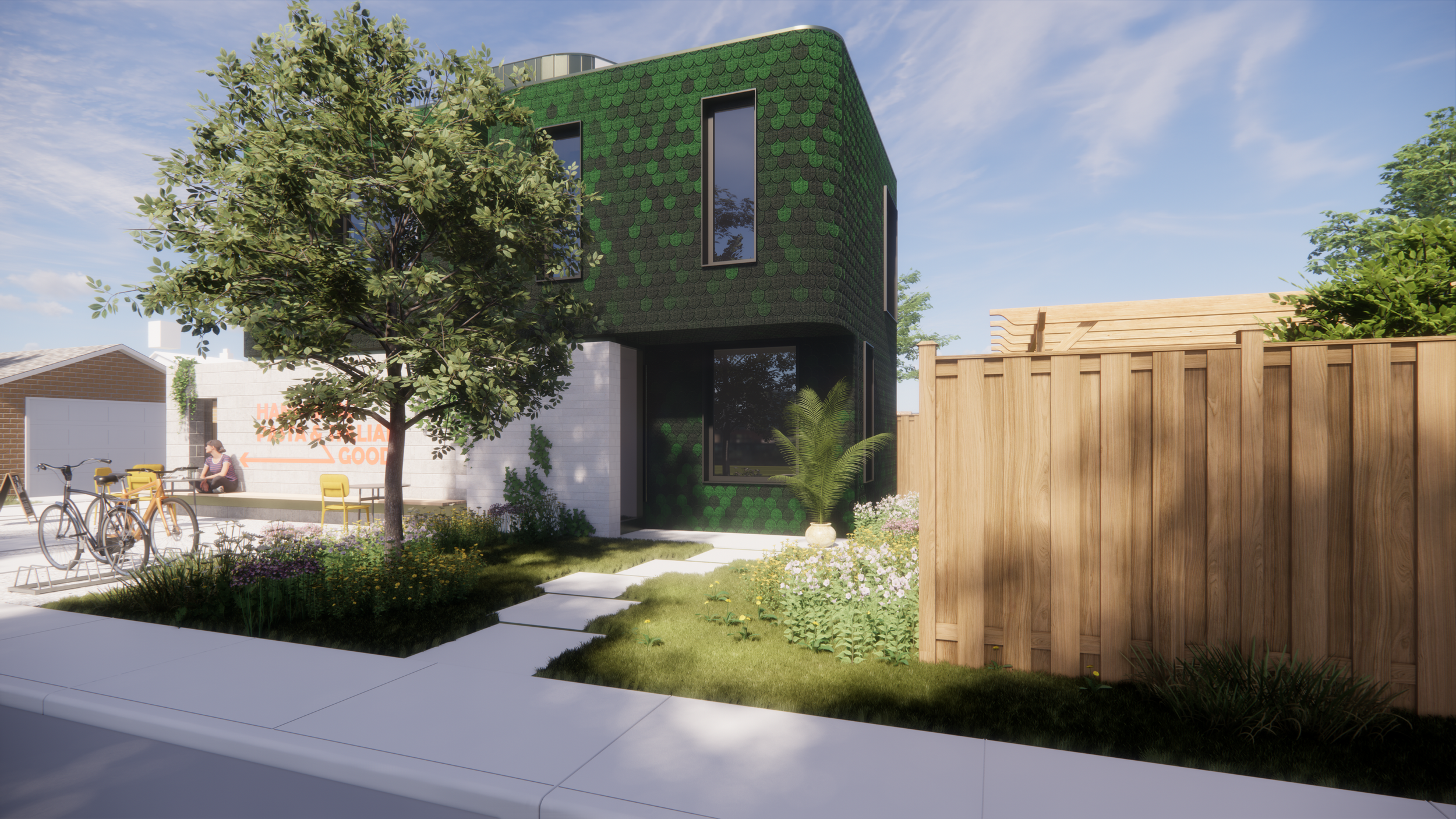
The retail unit is recessed into the space of the former garage, with the concrete block walls forming an intimate courtyard facing the laneway. Flexible interior spaces allow the building to adapt over time, accommodating workshops, private dining events, expanded retail functions, or additional living space as needs change. A new wall stiches together with the side wall of the garage, behind which you will find a recessed entryway to the residential unit above.
Adjacent to the street, a multi-use court provides parking for deliveries and creates an animated community space at the corner of the residential block.
This proposal was developed as part of a broader research study examining the potential for commercial uses in Toronto's laneways by Scorgie Planning in collaboration with LGA Architectural Partners, Studio of Contemporary Architecture (SOCA), Gladki Planning, LEA Group, and urbanMetrics with funding provided by the Neptis Foundation. Six architecture practices were invited to explore how different lot conditions and laneway contexts might accommodate different forms of commercial uses.